Concrete Pathways A Comprehensive Guide
Concrete pathways: They’re everywhere, from quiet residential gardens to bustling city plazas. But have you ever stopped to think about the design, construction, and environmental impact of these seemingly simple structures? This guide dives into the world of concrete pathways, exploring everything from choosing the right type and materials to maintaining and repairing your pathway for years to come. We’ll cover various construction methods, design considerations for aesthetics and accessibility, and even the environmental footprint of concrete. Get ready to become a concrete pathway expert!
We’ll cover a wide range of topics, ensuring you have a solid understanding of every aspect of concrete pathway creation and maintenance. From understanding the different types of concrete and their unique properties to mastering the construction process, this guide provides a practical and informative approach. We’ll also explore design elements that enhance both the aesthetic appeal and functionality of your pathway, ensuring it’s both beautiful and accessible. Finally, we’ll address the environmental concerns associated with concrete and offer solutions for creating more sustainable pathways.
Types of Concrete Pathways
Source: dreamstime.com
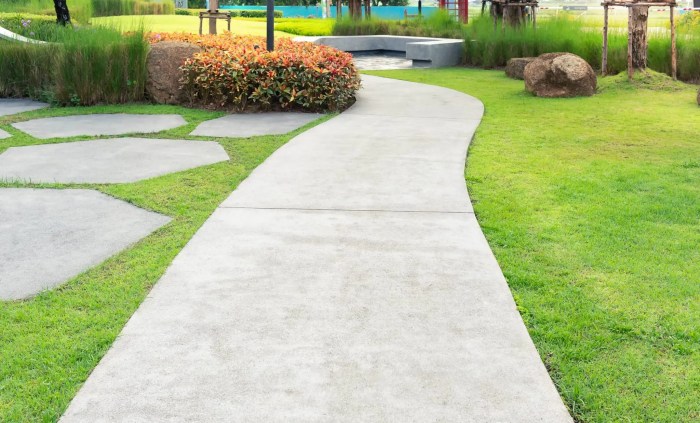
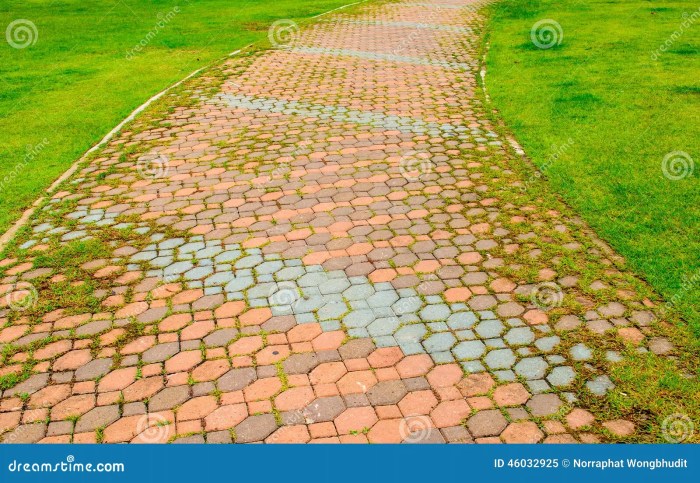
Concrete pathways offer a durable and versatile option for landscaping, adding both functionality and aesthetic appeal to any outdoor space. The choice of pathway type depends heavily on factors such as budget, desired aesthetic, and the intended use of the pathway. Let’s explore some common types and their characteristics.
Concrete Pathway Types: Variations in Shape, Size, and Pattern
The following table illustrates different types of concrete pathways, highlighting their variations in shape, size, and pattern. Remember that these are just examples; countless variations are possible based on individual design preferences and site constraints.
| Type | Shape | Size | Pattern |
|---|---|---|---|
| Standard Rectangular | Rectangular | Variable, typically 3-5 feet wide | Plain, broom-finished, or stamped |
| Curved Pathway | Curved or meandering | Variable width, often wider at turns | Plain, broom-finished, or stamped; can incorporate decorative borders |
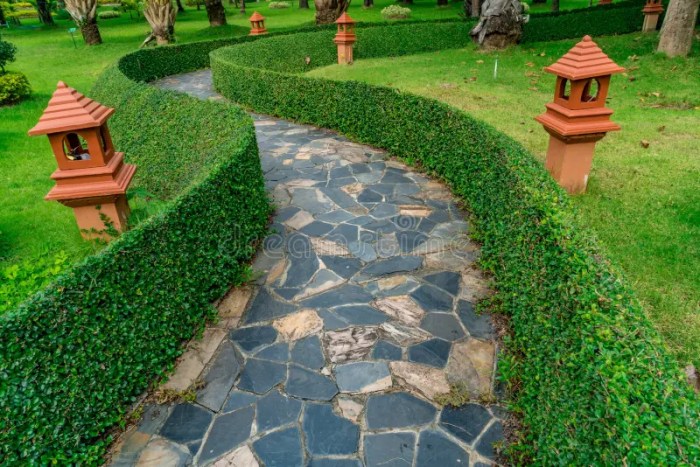
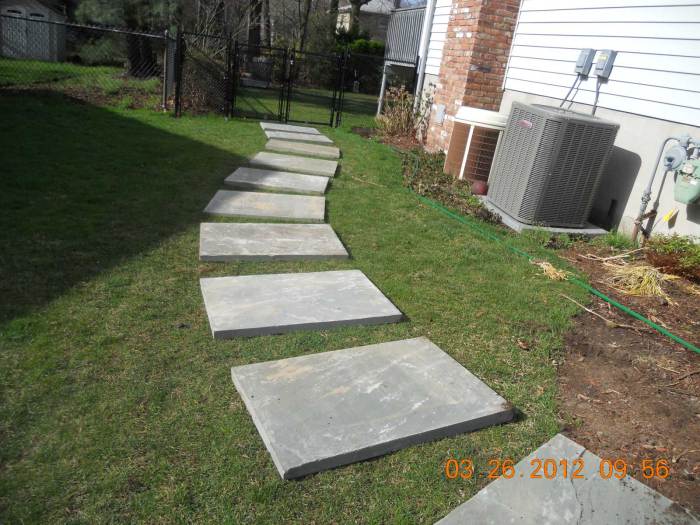
| Stepping Stone Pathway | Irregular, individual stones | Individual stones vary in size, typically 1-2 feet across | Natural stone appearance, often irregular |
| Geometric Pathway | Geometric shapes (squares, circles, hexagons) | Variable, depending on the shape and size of individual units | Clearly defined geometric shapes, often with contrasting borders |
Advantages and Disadvantages of Concrete Pathway Types
Understanding the pros and cons of each type is crucial for making an informed decision. The ideal choice depends on your specific needs and preferences.
Standard Rectangular Pathways:
- Advantages: Easy to construct, cost-effective, and provides a clean, straightforward look.
- Disadvantages: Can appear somewhat monotonous, and less visually interesting than other options.
Curved Pathways:
- Advantages: More visually appealing, can guide the eye through a garden or landscape, creates a sense of flow.
- Disadvantages: More complex to construct, potentially more expensive, requires careful planning and execution.
Stepping Stone Pathways:
- Advantages: Natural look, allows for vegetation to grow between stones, relatively easy to install.
- Disadvantages: Can be less durable than solid concrete pathways, may require more maintenance, and can be less suitable for high-traffic areas.
Geometric Pathways:
- Advantages: Modern and stylish, creates a strong visual impact and can complement contemporary landscaping.
- Disadvantages: More complex construction, may require specialized tools and techniques, potentially more expensive.
Materials Used in Creating Concrete Pathways
The key components of concrete are the binder (cement), aggregates (sand and gravel), and water. Variations in these materials can affect the final properties of the pathway.
Binders: Portland cement is the most common binder, providing strength and durability. Different types of Portland cement exist, offering varying setting times and strengths. High-early-strength cement might be chosen for faster project completion, while other types offer specific benefits for different conditions.
Aggregates: Aggregates significantly influence the concrete’s workability, strength, and durability. The size, shape, and type of aggregate used will impact the final texture and appearance. For example, using crushed stone aggregates can result in a more textured surface, while rounded aggregates produce a smoother finish. The grading of the aggregates (the distribution of particle sizes) is critical for achieving a strong and workable concrete mix.
Water: The water-cement ratio is crucial; too much water weakens the concrete, while too little makes it difficult to work with. The quality of the water also plays a role; impurities can affect the setting and strength of the concrete. Clean, potable water is always recommended.
Construction Methods for Concrete Pathways
Source: dreamstime.com
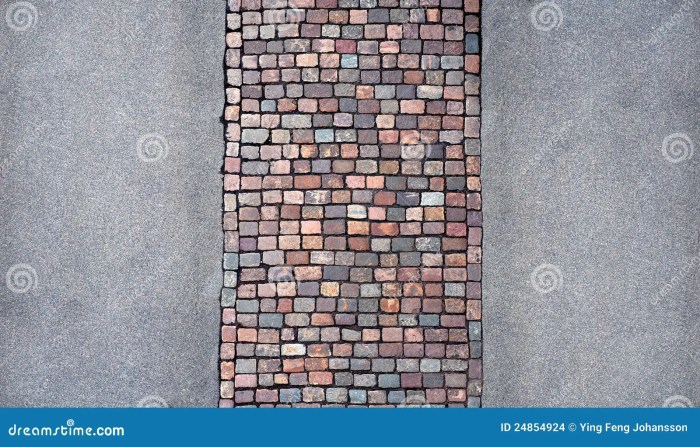
Building a concrete pathway is a straightforward process, but getting it right requires careful planning and execution. Understanding the different construction methods and choosing the right one for your project is key to ensuring a durable and attractive pathway. This section details the steps involved in building a standard pathway and compares various construction techniques.
Standard Concrete Pathway Construction
Constructing a standard poured-in-place concrete pathway involves several key steps. Following these steps carefully will lead to a strong and long-lasting pathway.
- Excavation and Sub-base Preparation: Dig a trench to the desired pathway depth, typically 4-6 inches, accounting for the concrete thickness and a compacted base layer. Ensure the base is level and compacted to prevent settling.
- Formwork Construction: Build forms using wood planks or metal edging to contain the concrete. Ensure the forms are straight, level, and securely fastened.
- Base Layer Installation: Add a compacted gravel or crushed stone base layer (typically 2-4 inches) for drainage and stability. This layer should be compacted using a plate compactor or hand tamper.
- Fabric Reinforcement (Optional): Lay a layer of reinforcing mesh (wire mesh) over the compacted base to strengthen the concrete and prevent cracking. This is particularly useful for wider pathways.
- Concrete Pouring: Pour the concrete into the forms, ensuring it fills the space evenly. Use a shovel or wheelbarrow to distribute the concrete.
- Consolidation and Finishing: Consolidate the concrete by vibrating it to remove air pockets. Then, use a screed to level the surface and a bull float to create a smooth finish. Further finishing techniques like troweling may be applied depending on the desired texture.
- Curing: Keep the concrete moist for several days after pouring to allow it to cure properly. This can be done by covering the pathway with plastic sheeting or regularly spraying it with water.
- Form Removal: Carefully remove the forms once the concrete has sufficiently cured (typically after a few days).
- Joints (If Necessary): For longer pathways, control joints should be added to minimize cracking due to thermal expansion and contraction. These can be created using a groover or a saw.
Comparison of Concrete Pathway Construction Methods
Choosing between poured-in-place and precast concrete depends on various factors, including budget, timeframe, and aesthetic preferences.
| Method | Advantages | Disadvantages | Cost Considerations |
|---|---|---|---|
| Poured-in-Place | Customizable shapes and sizes, seamless finish, relatively inexpensive for larger areas | The labor-intensive, longer curing time, the potential for imperfections if not done properly | Moderate to high, depending on size and complexity |
| Precast Concrete | Faster installation, consistent quality, less labor-intensive | Limited design options, visible seams, higher initial cost per unit | Higher initial cost, but potentially lower overall cost for smaller projects due to faster installation |
Residential Garden Pathway Design
This design focuses on a meandering pathway through a residential garden.
Materials List:
- Crushed stone (2 cubic yards)
- Concrete (3 cubic yards)
- Wood forms (10 linear feet)
- Reinforcing mesh (1 roll)
- Plastic sheeting (1 roll)
- Shovel, wheelbarrow, screed, bull float, hand tamper
Construction Plan:
The pathway will be 3 feet wide and approximately 20 feet long, curving gently through the garden. The construction will follow the steps Artikeld above for a standard concrete pathway. The curved shape will require more careful formwork construction. The pathway will be designed to seamlessly integrate with the surrounding landscaping, perhaps incorporating natural stones at the edges.
Maintenance and Repair of Concrete Pathways
Source: co.uk
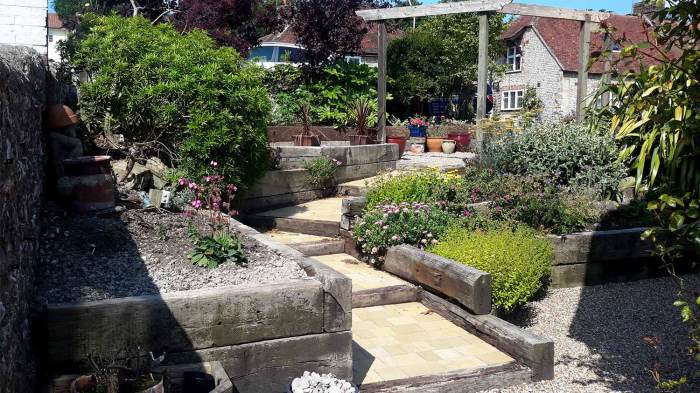
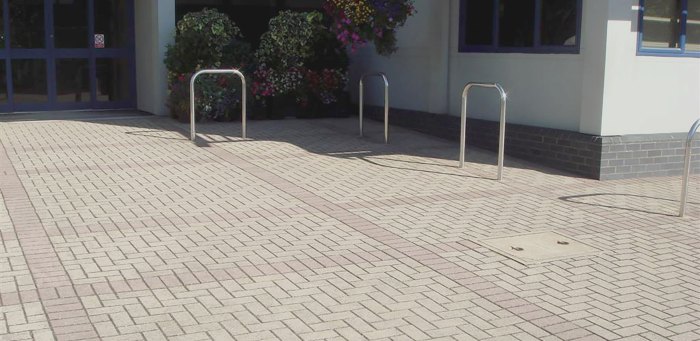
Keeping your concrete pathway in top condition involves regular maintenance and prompt repairs. Neglecting these aspects can lead to significant problems and costly repairs down the line. This section illustrates common issues, repair methods, and a preventative maintenance plan to ensure your pathway remains attractive and functional for years to come.
Common Problems in Concrete Pathways
Several factors contribute to the deterioration of concrete pathways. Understanding these issues is crucial for effective maintenance and repair.
- Cracking: Cracks, ranging from hairline fissures to significant breaks, are common due to settling, frost heave, or overloading. These cracks allow water penetration, leading to further damage.
- Staining: Oil stains, chemical spills, and algae growth can discolor concrete, diminishing its aesthetic appeal. These stains can be difficult to remove if left untreated.
- Erosion: Exposure to the elements, especially freeze-thaw cycles and heavy rainfall, can erode the concrete surface, leading to pitting and unevenness. This weakens the structural integrity of the pathway.
- Spalling: This refers to the chipping or flaking of the concrete surface, often caused by freeze-thaw damage or chemical reactions.
- Joint Deterioration: Expansion joints, designed to accommodate movement, can deteriorate over time, leading to cracking and uneven settling.
Repair Methods for Concrete Pathways
Addressing problems promptly is key to preventing further damage and maintaining the pathway’s structural integrity. The following table Artikels common repair methods and their approximate costs (these are estimates and can vary based on location, materials, and labor costs):
| Problem | Repair Method | Materials Needed | Approximate Cost (USD) |
|---|---|---|---|
| Cracks (Hairline) | Crack sealing | Concrete crack sealant, sealant gun | $10 – $30 per crack |
| Cracks (Larger) | Crack repair with patching compound | Patching compound, trowel, brush | $50 – $150 per crack |
| Staining (Oil) | Cleaning with degreaser and pressure washing | Degreaser, pressure washer | $50 – $150 (depending on size) |
| Staining (Algae) | Cleaning with bleach solution or algaecide | Bleach, algaecide, scrub brush | $20 – $50 (depending on size) |
| Erosion/Spalling | Patching with concrete mix | Concrete mix, trowel, water | $100 – $300 per square foot (depending on severity) |
| Joint Deterioration | Joint resealing | Joint sealant, sealant gun | $25 – $75 per joint |
Preventative Maintenance Plan for Concrete Pathways
A proactive approach to maintenance can significantly extend the lifespan of your concrete pathway.
This plan Artikels a schedule for cleaning, sealing, and crack repair:
- Cleaning: Sweep or blow debris off the pathway at least once a month. Pressure wash the pathway twice a year (spring and fall) to remove dirt, stains, and algae. Use a mild detergent if necessary.
- Sealing: Apply a concrete sealer every 2-3 years to protect against water damage and staining. This is especially important in areas with harsh weather conditions.
- Crack Repair: Inspect the pathway regularly for cracks. Repair hairline cracks immediately using a sealant. Larger cracks should be repaired with a patching compound as soon as possible to prevent further damage. Consider professional repair for extensive cracking.
Design Considerations for Concrete Pathways
Source: aplnj.com
Creating a beautiful and functional concrete pathway involves careful consideration of several design elements. The right choices can transform a simple walkway into a stunning feature that enhances your property’s aesthetic appeal and improves accessibility. This section explores key design aspects to help you achieve the perfect pathway for your needs.
Aesthetic Impact of Design Elements
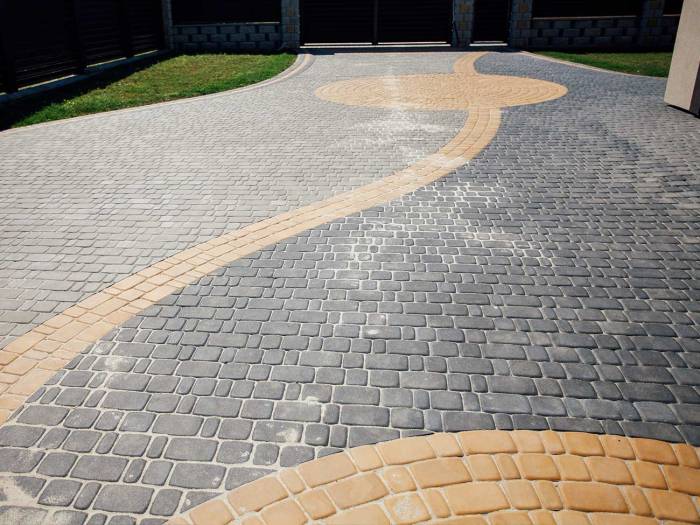
Color, texture, and pattern significantly influence a concrete pathway’s visual appeal. Color choices range from classic gray to vibrant hues achieved through pigments added to the concrete mix. Darker colors absorb more heat, which can be a factor in sunny climates. Textured surfaces, created using techniques like stamping or brooming, add visual interest and can improve slip resistance. Patterns, from simple lines to intricate designs, can create a sense of rhythm and flow, guiding the eye along the pathway. For instance, a modern pathway might utilize a smooth, grey surface with clean lines, while a rustic pathway could incorporate a stamped stone pattern with warm earth tones. The chosen design should complement the surrounding landscape and architecture.
Incorporating Accessibility Features
Accessible pathways are crucial for inclusivity. Ramps provide gentle inclines for wheelchairs and other mobility devices. Ramps should have a maximum slope of 1:12 (a 1-foot rise for every 12 feet of run) and a minimum width of 36 inches. Landings should be provided at the top and bottom of ramps, and intervals no more than 30 feet apart for longer ramps. These landings must be at least 5 feet wide. Textured surfaces, particularly on ramps, provide increased traction and prevent slips, especially in wet conditions. Specifications for textured surfaces can vary, but they should provide a tactile warning for visually impaired individuals. A common example is the use of exposed aggregate concrete, which provides a slightly rough surface. Clear markings and contrasting colors can also enhance visibility and improve safety for all users. For example, using contrasting color strips along the edges of the pathway can guide visually impaired people, while tactile paving can be incorporated at intersections or changes in direction.
Design Styles and Their Corresponding Materials and Construction Techniques
The overall style of your pathway should reflect your personal preferences and the architectural style of your home and garden.
Here are a few examples:
- Modern: Clean lines, smooth surfaces, minimalist patterns. Often uses a simple gray or off-white concrete, possibly with a polished finish. Construction typically involves pouring and finishing the concrete to a smooth surface, potentially incorporating integral color for a consistent hue.
- Rustic: Natural textures, earthy tones, possibly incorporating natural materials like stone or wood. Often stamped concrete to mimic the look of natural stone or brick. Construction involves applying a release agent, stamping the concrete with a chosen pattern, and then sealing it for protection.
- Traditional: Classic designs, perhaps incorporating curves or borders. May use a combination of materials, such as concrete and brick. Construction techniques vary depending on the chosen design but may include forming the concrete to create specific shapes and edges, and potentially adding decorative elements like borders or inlays.
Environmental Impact of Concrete Pathways
Source: alamy.com
Creating concrete pathways, while offering durability and functionality, carries significant environmental consequences. The production and disposal of concrete contribute to greenhouse gas emissions, resource depletion, and pollution. Understanding these impacts is crucial for making informed decisions about pathway construction and promoting sustainable practices.
Concrete production is an energy-intensive process, relying heavily on the extraction and processing of raw materials like cement, aggregates (sand, gravel), and water. The manufacturing of cement itself is a major source of carbon dioxide (CO2), a potent greenhouse gas, accounting for a substantial portion of the overall carbon footprint. Furthermore, the transportation of these materials to construction sites adds to the emissions. Once a pathway reaches the end of its lifespan, demolition, and disposal contribute further environmental burdens, often involving landfill space and the release of embedded carbon.
Comparison of Paving Materials
The environmental impact of concrete pathways varies considerably when compared to alternative paving materials. The following table summarizes key differences, considering carbon footprint, resource use, and longevity. Note that these values are estimates and can vary depending on specific factors like material sourcing and manufacturing processes.
| Material | Carbon Footprint (kg CO2e/m²) | Resource Use (Relative Scale) | Longevity (Years) |
|---|---|---|---|
| Concrete | 100-300 (highly variable) | High (significant aggregate and cement use) | 30-50+ |
| Asphalt | 50-150 | Medium (petroleum-based binder, aggregates) | 15-25 |
| Brick | 150-250 (highly variable depending on production) | Medium (clay, energy for firing) | 50+ |
| Gravel | 10-20 (primarily transportation related) | Low (naturally occurring material) | Variable often requires replacement |
Sustainable Practices for Concrete Pathways
Minimizing the environmental impact of concrete pathways requires adopting sustainable construction and maintenance practices. Using recycled materials, such as recycled concrete aggregates (RCA) in the concrete mix, significantly reduces the demand for virgin materials and lowers the overall carbon footprint. RCA can replace a portion of the natural aggregates, thereby conserving natural resources and reducing energy consumption. Furthermore, optimizing the concrete mix design to reduce the cement content while maintaining strength can lessen CO2 emissions. Implementing water-efficient construction techniques, such as using appropriate curing methods to minimize water usage, also contributes to environmental sustainability. Proper maintenance and timely repairs extend the lifespan of the pathway, reducing the need for premature replacement and associated environmental impacts. Choosing permeable concrete options can also help manage stormwater runoff and reduce the burden on drainage systems.
Last Word
Source: coastalcreationsct.com
Creating a durable and aesthetically pleasing concrete pathway involves careful planning and execution. From selecting the appropriate type of concrete and construction method to implementing a proactive maintenance plan, every step contributes to the longevity and beauty of your pathway. By understanding the design considerations, environmental impacts, and repair techniques, you can create a pathway that enhances your space for years to come. Remember to consider accessibility and sustainability throughout the process to create a pathway that’s both functional and environmentally responsible. So, get started on your concrete pathway project, armed with the knowledge to make informed decisions every step of the way!